When Should You Start Shopping for a Wedding Dress?
Most brides should start wedding dress shopping about 9 to 12 months before the wedding. That window gives you time to explore styles, attend bridal appointments, choose a gown, account for its arrival, and complete necessary alterations without concentrating every step near the wedding date. If your wedding is closer, you may still have suitable options, so a shorter timeline should not stop you from contacting a bridal shop.
The key is understanding what happens after you start shopping and planning each stage accordingly.
Why Start Wedding Dress Shopping 9 to 12 Months Ahead?
Starting 9 to 12 months before your wedding provides flexibility. Finding a gown is only one part of the process. Your timeline may also include appointments, gown availability or ordering, fittings, alterations, shoes, undergarments, and final preparations.
Beginning early also gives you space to make a thoughtful choice. You can compare silhouettes and details without feeling that an approaching wedding date has to determine your decision.
Think of 9 to 12 months as a practical planning guideline rather than a deadline. The right schedule ultimately depends on the gown you select and your individual wedding timeline.
What Does a Wedding Dress Shopping Timeline Look Like?
A useful wedding dress timeline follows the actual stages of choosing and preparing a gown rather than assigning an arbitrary date to every task.
9 to 12 Months Before: Begin Shopping
Research the styles you are drawn to and schedule your bridal appointment. A small collection of inspiration photos can help communicate your preferences, but avoid deciding that only one silhouette will work before trying dresses.
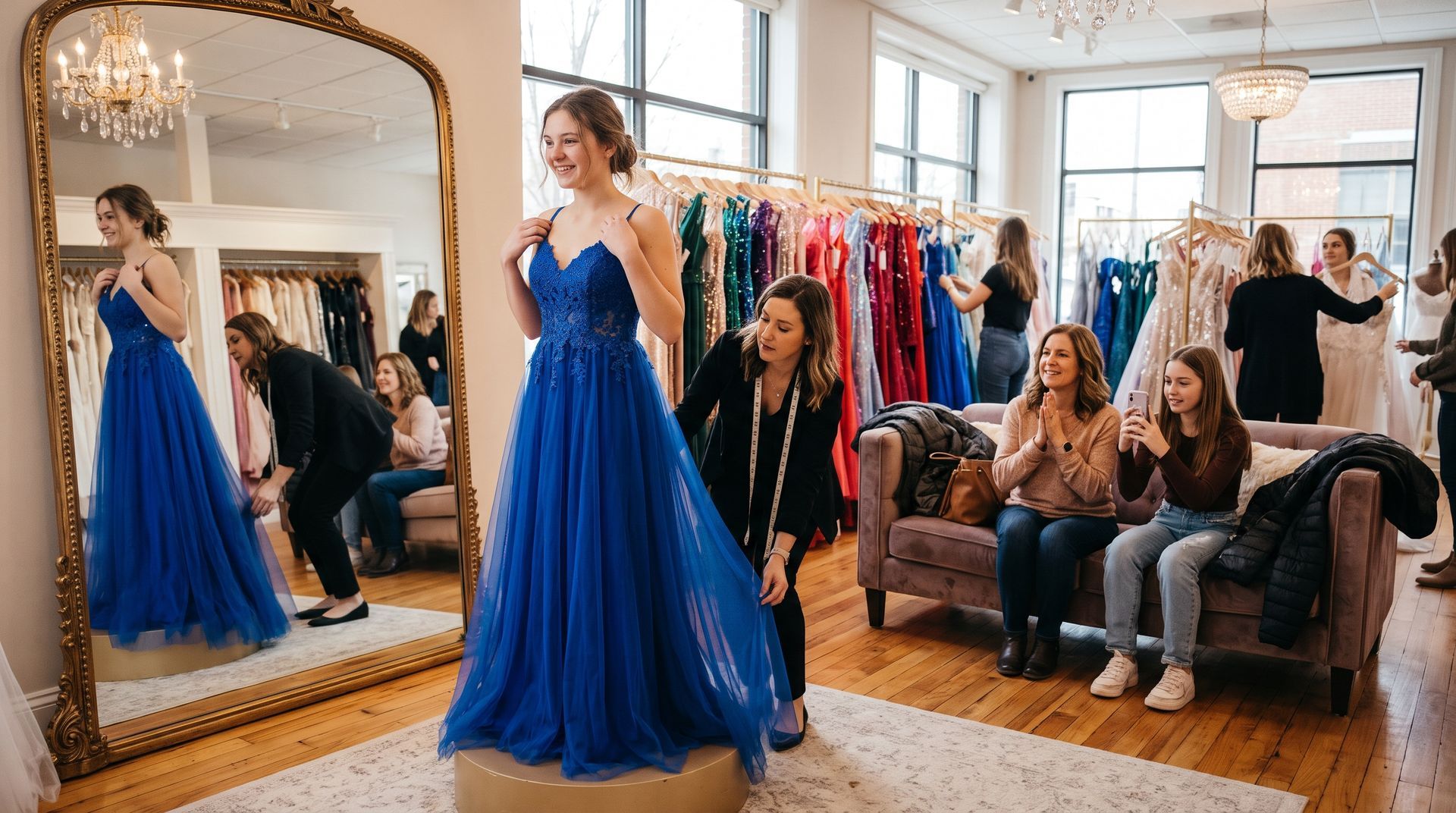
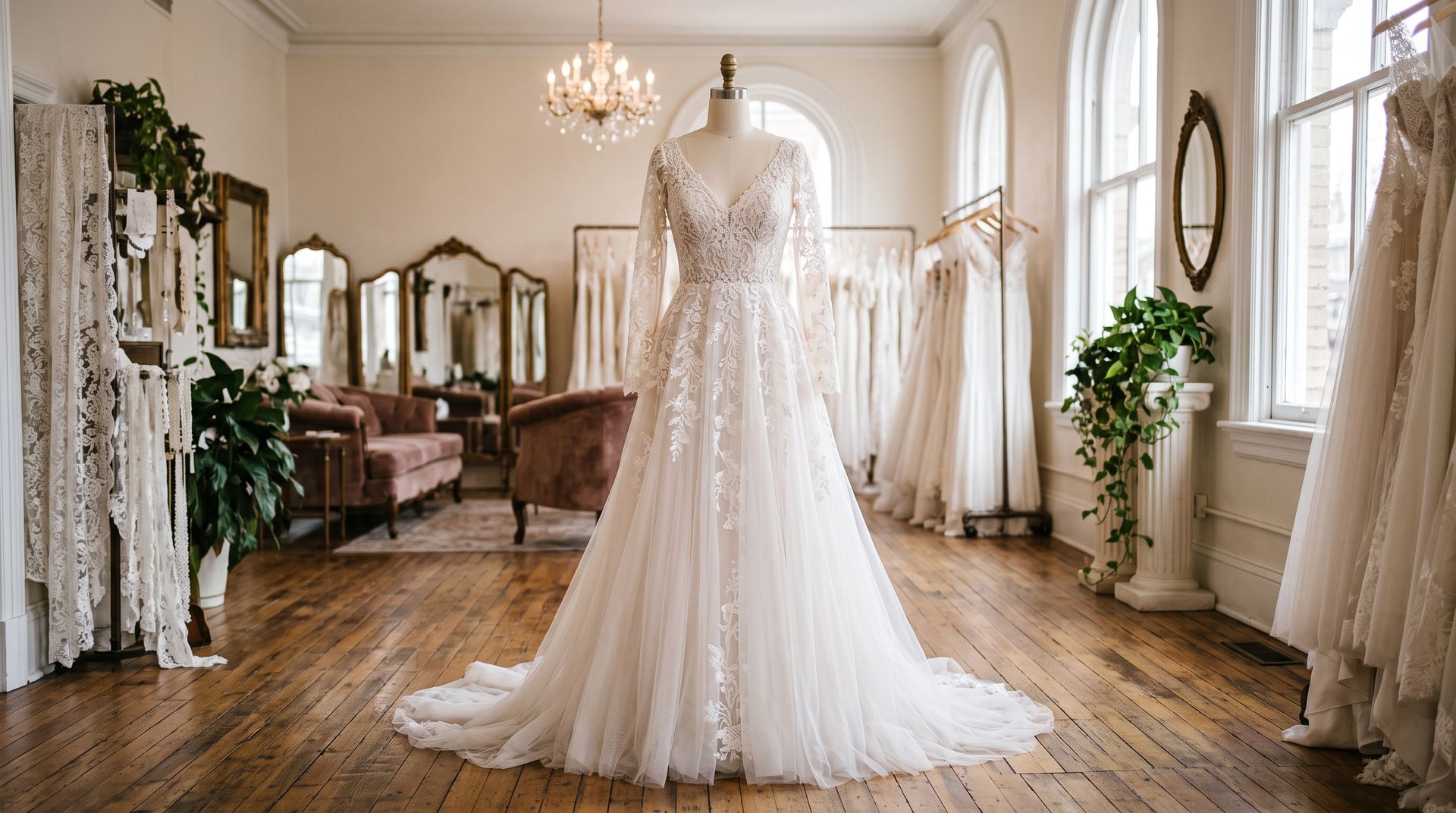
This is the time to explore Bridal Gowns & Wedding Dresses in person. Comparing fabrics, necklines, silhouettes, and details on your body can reveal preferences that online browsing cannot.
After Choosing Your Gown: Confirm the Next Steps
Once you select a dress, ask what happens next. Confirm any expected arrival information and find out when you should begin planning fittings.
This is also a good time to think about the shoes and foundational garments you expect to wear. These choices can affect how the gown fits and where the hem falls.
Once the Gown Is Ready: Plan Alterations
Do not wait until the final weeks to begin thinking about fit. Alteration needs vary by gown and may involve the bodice, hem, straps, sleeves, bustle, or other details.
Follow the timeline recommended for your specific dress rather than assuming every bride needs the same fitting schedule.
Final Weeks: Focus on Fit and Preparation
By the final weeks, your attention should be on finishing details rather than beginning major dress decisions. Follow fitting instructions and learn how to manage features such as the train or bustle if your gown includes them.
What Can Delay Your Wedding Dress Timeline?
Several factors can make a compressed timeline more difficult. Gown availability, ordering or arrival times, fitting schedules, and the extent of alterations can all influence how much preparation time you need.
Changing key items late in the process can also create complications. For example, switching to shoes with a different heel height after the hem has been planned may affect the finished length.
Another common issue is treating alterations as something to arrange at the last minute. Planning Formal Wear Alterations & Seamstress Services as part of your dress timeline helps keep fittings connected to the rest of your wedding preparations.
What If Your Wedding Is Less Than Nine Months Away?
Do not assume you are too late to shop for a wedding dress. Instead, contact the bridal shop and clearly communicate your wedding date from the beginning.
A shorter timeline makes focused shopping especially important. Ask which options are realistic for your schedule and understand the next steps before making your selection.
Avoid choosing a gown simply because you feel behind. Fit, comfort, style, and confidence still matter. Clear communication can help you concentrate on workable options rather than worrying about a timeline you cannot change.
FAQs About Wedding Dress Shopping Timelines
Is 12 months too early to shop for a wedding dress?
No. Beginning about 12 months ahead can provide useful flexibility for bridal appointments, gown selection, arrival, fittings, and alterations. The exact schedule will depend on your chosen dress and wedding date.
Can I shop for a wedding dress before choosing my venue?
Yes. A venue can provide useful context for your bridal style, but it is not required before you start shopping. You can focus on silhouettes and details that reflect your personal preferences.
What if my wedding is only a few months away?
Contact a bridal shop and provide your wedding date. Options and timelines vary, so direct guidance is more useful than assuming you have missed your opportunity to find a gown.
When should I plan wedding dress alterations?
Discuss alterations after selecting your gown so you understand its specific fitting needs. Your seamstress can recommend a schedule based on the dress, required adjustments, and wedding date.
Start Your Wedding Dress Timeline With Millie’s
Millie’s Bridal & Formal Shoppe helps brides in Tullahoma and surrounding Middle Tennessee communities take a more organized approach to wedding dress shopping. Whether your wedding is a year away or you are working with a shorter schedule, communicating your date early can help clarify your options and next steps.
Ready to begin your search? Contact Millie’s Bridal & Formal Shoppe to plan your bridal visit and start building a wedding dress timeline that works for your wedding day.
Recent Posts